The breaking line
Other PeopleThe breaking line names a condition of precarious survival: the point at which another impact may turn damage into an irreversible fracture. The image gathers the narrator’s fear for Mary Lamb / Amy Hide, the insecurity of poor people’s living arrangements, and a warning shaped by knowledge of having already suffered a devastating blow. It is at once a social boundary, a psychological alarm, and a lonely place from which the narrator watches for what might crack next.
Impact and the warning not to break
The image is introduced through the language of a smash: a blow that can arrive whether or not a person can avoid it. The warning does not promise that hardship can be prevented or that recovery is assured. Instead, it insists on a narrower form of survival: if the blow cannot be escaped, the person must not break under it. The speaker stresses the stakes by distinguishing a recoverable injury from a fracture that nothing can put back together. The force of the warning comes from the claim that it is spoken by someone who has taken a major blow and knows the possibility of lasting damage from experience.
This language turns “don’t break” into more than encouragement. It recognizes that people can be struck by circumstances they did not choose, while still describing endurance as urgent. The warning’s repetition sounds both protective and fearful: another smash may be coming, but neither its size nor its timing is known. The breaking line is therefore not a clean boundary between safety and danger. It is the unstable limit at which a person continues to function while anticipating that the next impact may exceed what can be borne.
Material precarity and the breaking line
The metaphor is set against an account of women who have exhausted money, friends, chances, and good luck. Their circumstances are described as shameful from an outside perspective, but shame does not adequately name what they feel; the narration asks who made their position and invites the reader to consider how such a situation would feel. That context makes the breaking line social as well as inward: people approach it after resources and opportunities have been used up, not simply because they lack strength.
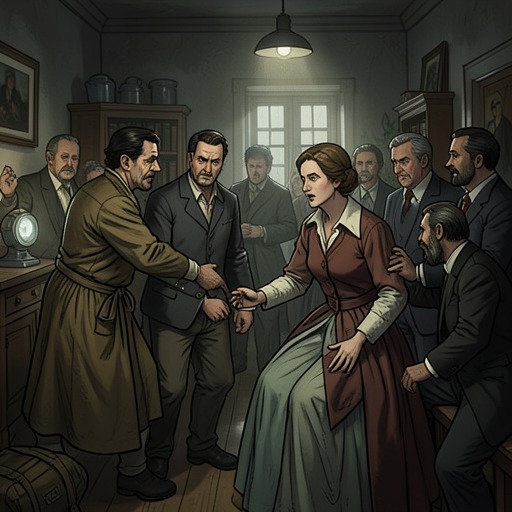
The contrast between the hostel and the squat gives that precariousness a physical setting. Squats may offer poor people places to live in rich people’s empty houses, and some residents take communal life seriously. Yet even a relatively workable squat remains uncertain. Arguments over milk, bathroom schedules, and utility bills carry on downstairs while another room may contain a person in acute distress; the house can fill with screams, and residents cannot reliably prevent events or keep danger out. The phrase “breaking line” gives a name to life under that combination of ordinary routine and sudden crisis. Domestic arrangements exist, but they do not amount to control over what may happen next.
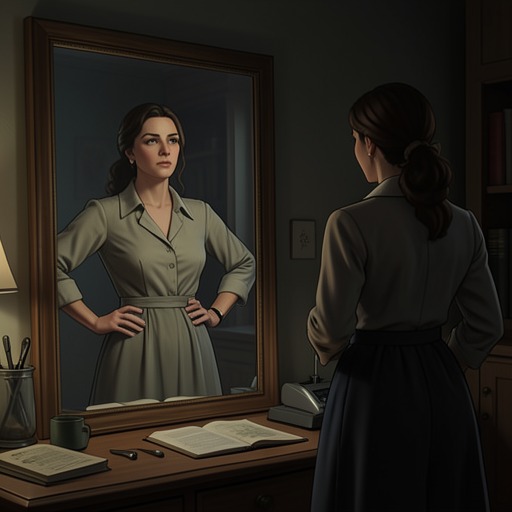
For the narrator, this risk is concentrated in the prospect of Mary Lamb / Amy Hide being drawn further into places of deprivation and crisis. The wish to get her away from hostels, institutions, soup queues, and troubled homes is expressed through the image of a crystal glass struck too hard with a knife. The glass sings along its line of fracture: it has not yet shattered, but the damage is already audible. The image makes vulnerability vivid without claiming that the fracture has happened. It registers both the narrator’s fear and the limits of protection: wanting Mary Lamb / Amy Hide removed from danger is not the same as being able to remove her.
An isolated vantage point
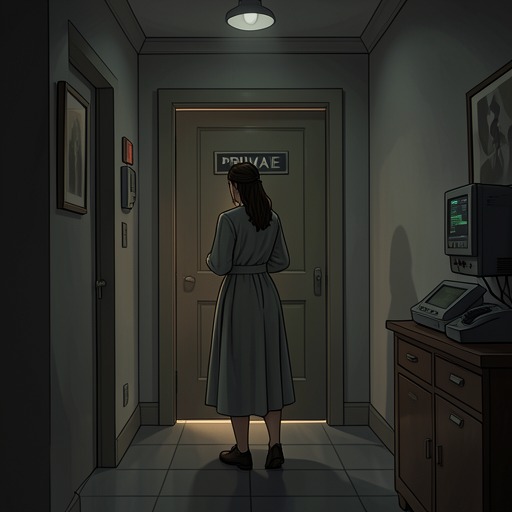
The narrator defines the breaking line as the place where the narrator walks, or sometimes thinks of walking. The qualification matters: the location is partly imagined, yet its soundscape is sharply specified. The ground, the walls of air, and the sealing sky seem ready to crack. The metaphor expands from an individual’s breaking point into an environment that itself feels close to rupture, so that danger appears to be distributed through the world rather than confined to a single person or room.
Despite that expanded landscape, the breaking line is not a place of shared solidarity. Other people walk there, but the narrator cannot see them; the lines remain elsewhere and never cross. No figures loom into view. The image therefore makes isolation part of the danger: people may face similar thresholds without meeting or recognizing one another. The narrator’s own uncertainty about walking there intensifies that separation, leaving the line at once a description of peril and a way of imagining the narrator’s distance from others.
Attachment and repeated accusation
The narrator’s protective appeal is complicated by an admission of responsibility: the narrator says that things have been done to Mary Lamb / Amy Hide, then counters that she has also done things to the narrator. The accusation is repeated. Its return makes the attachment sound injured and unresolved, with neither protection nor blame settling the relationship into a simple account of who has harmed whom. The narrator’s wish to keep Mary Lamb / Amy Hide safe coexists with the recognition that the narrator has contributed to her experience.
Elsewhere, the narration reflects that love is the most a person can feel, but that love has no meaning by itself without someone there to feel it. In this context, the breaking line also shadows attachment: to feel intensely is to risk being hurt, while intensity offers no guarantee that either person can keep the other safe. The metaphor does not resolve that contradiction. It holds together the urge to protect, the possibility of mutual injury, and the fear that a further blow might make repair impossible. Its significance lies in that tension: endurance is demanded, but the line itself remains audible, fragile, and uncrossed.